
M&A Advisor vs Broker for a $5–10M California Business Sale
M&A Advisor vs Broker for a $5–10M California Business Sale
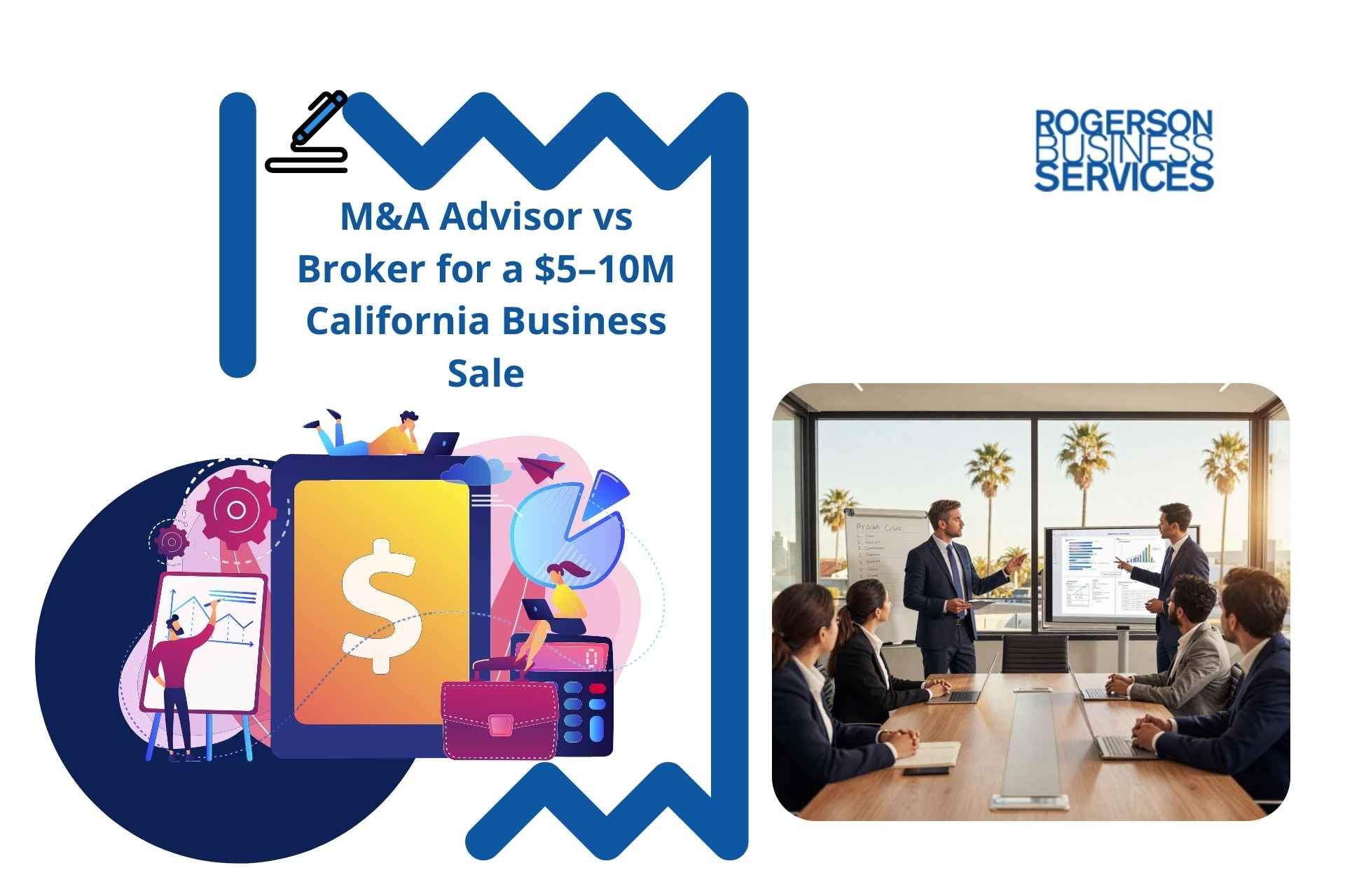
If you plan to sell a California business for roughly $5–10M, you can often hire either a business broker or an M&A advisor, but you should not treat the labels as a tie-breaker. Instead, compare the process depth and the deliverables you will actually receive, because those inputs shape your buyer coverage, your negotiating leverage, and your probability of closing.
How to use this guide (2 minutes):
- Start with your goal (highest price, highest certainty, best terms, or maximum confidentiality).
- Skim the comparison table, then jump to the Deliverables checklist and make sure each item is explicitly included in the engagement scope.
- Use the Interview questions to force specificity on buyer outreach, IOI/LOI management, and retrade handling.
- If your buyer universe is likely concentrated (specialty industry, niche geography, or a few logical strategies), prioritize the intermediary who can run a controlled, competitive process—not just “market the listing.”
Key Takeaway: Choose the intermediary who can run a confidential, competitive process and produce the deliverables that support it—because price, structure, and deal certainty move together
.
Quick comparison: business broker vs M&A advisor (California, $5–10M)
| Evaluation criterion | Business broker (typical) | M&A advisor (typical) | What to verify before you sign |
|---|---|---|---|
| Scope | Markets the opportunity, screens buyers, coordinates the transaction | Manages a full sell-side process end-to-end, and shapes positioning and negotiation | Ask for a written scope and a deliverables list |
| Fees | Often success-fee weighted; may include a listing fee | Often engagement fee/retainer + success fee (varies by firm and deal) | Confirm fee base (cash, earnout, rollover, assumed debt) and the tail |
| Buyer outreach | Often broader marketing + inbound | Often curated outreach to strategics and financial buyers | Ask for a sample buyer universe map and outreach cadence |
| Structuring | Supports standard structures but may not drive the structure strategy | Often pushes structure as a value lever (working capital, earnout guardrails, rollover) | Ask how they negotiate structure, not only price |
| Negotiation | Can negotiate, but the depth varies by individual | Often runs IOI/LOI rounds and controls process leverage | Ask how they manage IOIs, LOIs, exclusivity, and retrades |
| Outcomes | Can close strong outcomes in the right fit | Often improves leverage when the buyer set is concentrated or sophisticated | Ask for references and closed-deal examples similar to yours |
Scope of work: what you hire them to do (and what you still own)
A broker and an M&A advisor can both “help you sell,” yet they can deliver very different scopes—so treat this as a practical business broker vs M&A advisor California decision rather than a title contest.
A broker often focuses on marketing and transaction coordination, so they might value your business, prepare a summary package, identify buyers, and push the deal to closing. An M&A advisor often expands the scope because they plan the process, position the story, and manage competitive tension across buyers.
Even so, you still own the two hardest jobs: you must keep the business performing, and you must decide what trade-offs you will accept.
Before you compare intermediaries, decide your non-negotiables, for example:
- Protect confidentiality, because a leak can hit employees, customers, and vendors.
- Prioritize deal certainty, because a broken LOI can cost months.
- Define “net proceeds,” because taxes, working capital, and earnouts can swing outcomes.
For a broader overview of the process steps, review these steps to sell a business in California and then map your intermediary’s scope to each step.
Fees in an M&A advisor vs broker for a $5–10M California business sale: compare the model and the fine print

Owners often start with the question, “Do I pay a retainer or not?”—but you should also ask, “How does a sell-side M&A advisor's fee vs broker commission structure change incentives, and what does the engagement letter require?”
Many middle-market advisors charge some form of engagement fee, and they combine it with a success fee, partly because the work demands time, staff, and upfront production. Firmex summarizes these trends in its survey-based M&A Fee Guide 2024–2025 — North American Edition, and the details vary by firm size, deal size, and complexity.
A success-fee-heavy model can align incentives, but it can also tempt an intermediary to push a marginal LOI across the line “because it’s close.” A retainer model can fund deeper work, yet it can also feel expensive unless you receive concrete deliverables.
So compare fee models, but also compare definitions:
Also, because this is a YMYL financial decision, treat the engagement letter as part of diligence:
- Ask your attorney to review the fee base, tail, exclusivity language, and termination/ownership of work product.
- Confirm in writing how confidentiality is protected (NDA workflow, data room permissions, and what gets shared at each stage).
- Make sure the intermediary’s incentives match your priorities (certainty vs speed vs headline price).
- Fee-based: Does the success fee apply to cash at close only, or also to earnouts, seller notes, assumed debt, and rollover equity?
- Minimum fee: Does the intermediary require a minimum commission regardless of price?
- Tail period: If the engagement ends, how long does the intermediary collect a fee if a buyer they contacted closes later?
- Reimbursables: Who pays for travel, background reports, data room costs, and third-party work?
Pro Tip: Ask for two fee illustrations—one “clean” all-cash close and one with an earnout—because owners often misread how the fee base works.
Buyer outreach depth: A listing rarely creates a competitive process by itself
For a $5–10M California sale, you may face a concentrated buyer universe, and you may also face sophisticated buyers who run tight diligence. Because of that, you should ask how your intermediary creates competition.
A structured sale process typically uses staged disclosures: a teaser, then an NDA (non-disclosure agreement), then a CIM (confidential information memorandum), and then a controlled path to IOIs (indications of interest) and LOIs (letters of intent). Houlihan Capital outlines this staged approach in its 2024 guide to the M&A sale process.
A broker may still run this structure, but many brokers lean on broad marketing channels, while many M&A advisors lean on curated outreach to strategic and financial buyers. Axial’s comparison of business brokers vs M&A advisors frames this difference as “breadth vs depth,” although your results will depend on the individual.
So, verify outreach depth with specifics:
- Ask how they build the buyer list (and whether they separate strategics, family offices, and private equity add-on buyers).
- Ask how they control confidentiality during outreach.
- Ask how they set and manage deadlines, because deadlines create action.
Deal structuring: price is one lever, but structure often decides your real outcome
Owners often ask, “Can you get me a higher multiple?” but they should also ask, “Can you negotiate terms that protect my proceeds and my time?”
In the $5–10M range, structure can swing the outcome, because buyers may propose:
- an earnout tied to post-close performance,
- a seller note,
- a working capital target that shifts cash at close,
- a rollover equity requirement.
A strong intermediary will explain each lever in plain English, and they will also push for clear definitions—because vague structure terms invite conflict later.
Two quick examples of what “clear definitions” prevent:
- Earnout definition ambiguity: A buyer proposes an earnout tied to “EBITDA,” but the LOI does not define add-backs, owner compensation, one-time expenses, or how new initiatives are treated. If you do not lock definitions early, you can end up arguing about accounting policy after close.
- Working capital peg retrade: A buyer agrees to a price, but later claims working capital was “below normal” and seeks a purchase price reduction. A well-defined peg methodology (time period, seasonality, and which accounts count) reduces room for late-stage repricing.
If you want to pressure-test your numbers before you negotiate structure, start with a clear valuation baseline. This California business valuation guide can help you frame normalized EBITDA and add-backs before buyers do it for you.
Negotiation strength and process control: ask who runs IOIs, LOIs, and exclusivity
A competitive process does not run itself, and it does not stay fair without tight control.
Vista Point Advisors explains why competitive processes change economic outcomes in its article on why a competitive process matters when selling your business. You can practically apply that idea: you want an intermediary who can run parallel buyer conversations, yet still keep your timeline and your confidentiality intact.
So ask how they manage the friction points:
- IOIs vs LOIs: Do they run a first round of IOIs to narrow the field, or do they jump straight to LOIs?
- Management meetings: Do they prepare you, control the agenda, and capture follow-up items, or do they “wing it”?
- Exclusivity: Do they push to shorten exclusivity windows, or do they accept long lockups without safeguards?
- Retrades: If a buyer tries to reprice late, do they create alternatives, or do they concede because the process lost momentum?
Outcomes to expect and how to verify them (without relying on promises)
A broker can outperform an M&A advisor when the sale is straightforward, when the buyer universe is broad, and when the key risk is simply finding a qualified buyer.
An M&A advisor can outperform a broker when the deal demands deeper preparation, when confidentiality risk runs high, when buyers will negotiate structure aggressively, or when you need someone to run a disciplined process so you do not lose leverage.
But you should verify outcomes the same way either way.
Focus on proof you can audit:
- Closed deals in California that match your size and industry.
- References you can call (and not only “friendly” references).
- Examples of deliverables (redacted teaser, redacted CIM outline, buyer list format).
- A clear timeline with responsibilities.
Deliverables checklist: what you should receive in a $5–10M California sale process
Use this checklist to compare proposals side by side. It also works as a sell-side deliverables CIM teaser data room map, because it shows what you should receive, when you should receive it, and who should own it. If an intermediary cannot produce or describe these deliverables, ask why, because the gaps usually show you where the process will break.
Strategy and valuation
- Written value drivers and value risks (in plain English)
- Valuation range and the assumptions behind it
- Quality-of-earnings readiness plan (even if you hire a third party)
Marketing package
- Confidentiality plan and staged disclosure approach
- Teaser (non-confidential overview)
- CIM (confidential information memorandum) outline and draft process
- Redacted financial summary and KPI story
Buyer coverage
- Buyer universe map (strategics vs financial buyers)
- Target buyer list with rationale
- Outreach plan (who contacts whom, when, and how follow-ups work)
Process control
- NDA workflow and logging
- Data room plan (folders, permissions, and “who sees what”)
- Bid process calendar (IOIs, LOIs, management meetings, diligence windows)
Negotiation support
- LOI comparison framework (price and structure)
- Working capital and earnout negotiation approach
- Coordination with counsel and tax advisors
If you need a baseline list of documents owners commonly assemble, this diligence documents checklist can help you reduce scrambling and distraction.
Interview questions to ask any broker or M&A advisor
Use these questions to force specificity. If the intermediary answers vaguely, ask follow-ups, because your deal will demand detail.
Process and buyer outreach
- “Walk me through your process week by week—what do you do, and what do I do?”
- “Show me a redacted teaser and a redacted CIM outline from a prior deal.”
- “How do you build the buyer list, and how do you decide who you will not contact?”
- “How do you protect confidentiality when you start outreach?”
Negotiation and structuring
- “Give me an example of how you improved structure, not just price.”
- “How do you set and negotiate working capital targets?”
- “How do you handle earnouts so I do not argue about definitions after closing?”
- “When a buyer retrades late, how do you respond, and what alternatives do you create?”
Proof and fit
- “Which three closed deals resemble my business in California, and what went right and wrong?”
- “Can I speak with two prior clients and one attorney or CPA who worked with you?”
- “Who will run my day-to-day process—partner, VP, or analyst—and how many deals does that person handle at once?”
Fees and engagement terms
- “Define your fee base in writing. Does it include earnouts, seller notes, rollover equity, or assumed debt?”
- “What does your tail look like, and what triggers it?”
- “What deliverables do I own if we terminate early?”
California-specific checkpoints: confirm licensing, and then protect confidentiality
California adds practical wrinkles, and you should address them early.
First, verify licensing and supervision where it applies. Use this quick checklist:
- Ask for the individual license number and (if relevant) the supervising broker information.
- Verify the license via the California Department of Real Estate (DRE) resources, including its Real Estate Law publications and corporation license guidance.
- Confirm who is actually doing the work day to day (and whether that person is properly supervised if required).
- Watch for red flags: reluctance to provide license details, unclear supervision, or vague answers about how transactions are handled in California.
Second, protect confidentiality as you market. You can create a staged process, and you can control disclosures, but you must also plan for the people problems: employees notice meetings, and customers notice changes. So set rules about who knows what, when, and why.
If you want to align expectations on timing, review how long escrow takes in California, and then ask your intermediary how they manage timeline risk.
If you want to compare marketing approaches, you can also review where to list your company for sale and then ask how your intermediary uses listings and direct outreach without compromising confidentiality.
Who should choose which (practical scenarios)
Choose a business broker when:
- You expect a broad buyer pool and a simpler structure.
- You want a lighter process, and you accept more owner involvement.
- You prioritize a success-fee-heavy model, and you can still demand strong deliverables.
Choose an M&A advisor when:
- You need a curated buyer process because the buyer universe is concentrated.
- You anticipate heavier diligence and more complex negotiation.
- You want a quarterback who controls process, positioning, and structure.
If you still feel torn, use this as a simple rule: choose the intermediary who can show you how to choose an M&A advisor in California with documents, timelines, and references—not just confidence.
Choose either one only if you see proof: deliverables, process artifacts, and references.
Next steps
If you want a discreet way to decide, ask for a written scope, map it to the deliverables checklist above, and then run the interview questions with two intermediaries—because you can only choose well if you can see the work.
If you want a California-focused perspective on valuation and sell-side process design, Rogerson Business Services can offer a confidential fit-check call and outline what a disciplined $5–10M California process usually requires, especially how we protect confidentiality with staged disclosures, NDA logging, and controlled data room permissions, so you can choose the right intermediary, even if you do not hire us.
By: Rogerson Business Services (California lower middle-market M&A advisory)
About the author/firm: Rogerson Business Services advises owners of $2M–$50M revenue businesses in California on valuation, sell-side M&A execution, and exit planning.
Profiles: CABB · IBBA · M&A Source · Axial · About
Last updated: May 2026
Privacy: If you contact us through this page, we handle your information per our Privacy Policy.
Disclaimer: This article is for educational purposes only and is not financial, tax, or legal advice. Consult qualified professionals for advice specific to your situation.
About the Author
Andrew Rogerson is an M&A advisor with 20+ years of mergers and acquisitions experience working with owner-led businesses. His qualifications include Certified Mergers & Acquisition Professional (CM&AP) and Mergers & Acquisition Master Intermediary (M&AMI) designations from M&A Source, a Certificate in Private Capital Markets (CIPCM) from Pepperdine University, and the Certified Business Intermediary (CBI) credential.
M&A Learning Source

Hey there! Can we send you a gift?
We just wanted to say hi and thanks for stopping by our little corner of the web. :) we'd love to offer you a cup of coffee/tea, but, alas, this is the Internet.
However, we think you'll love our email newsletter about building value and properly position your company before transition/exit your business ownership.
As a special welcome gift for subscribing, you'll also get our helping and educational guides, tips, tutorials, etc.. for free.
It's filled with the best practices for retiring serial business owners like Dan Gilbert, Larry Ellison, Warren Buffett, and many more.
Just sign up for our emails below.