Steps to Sell a Business in California For Max Value
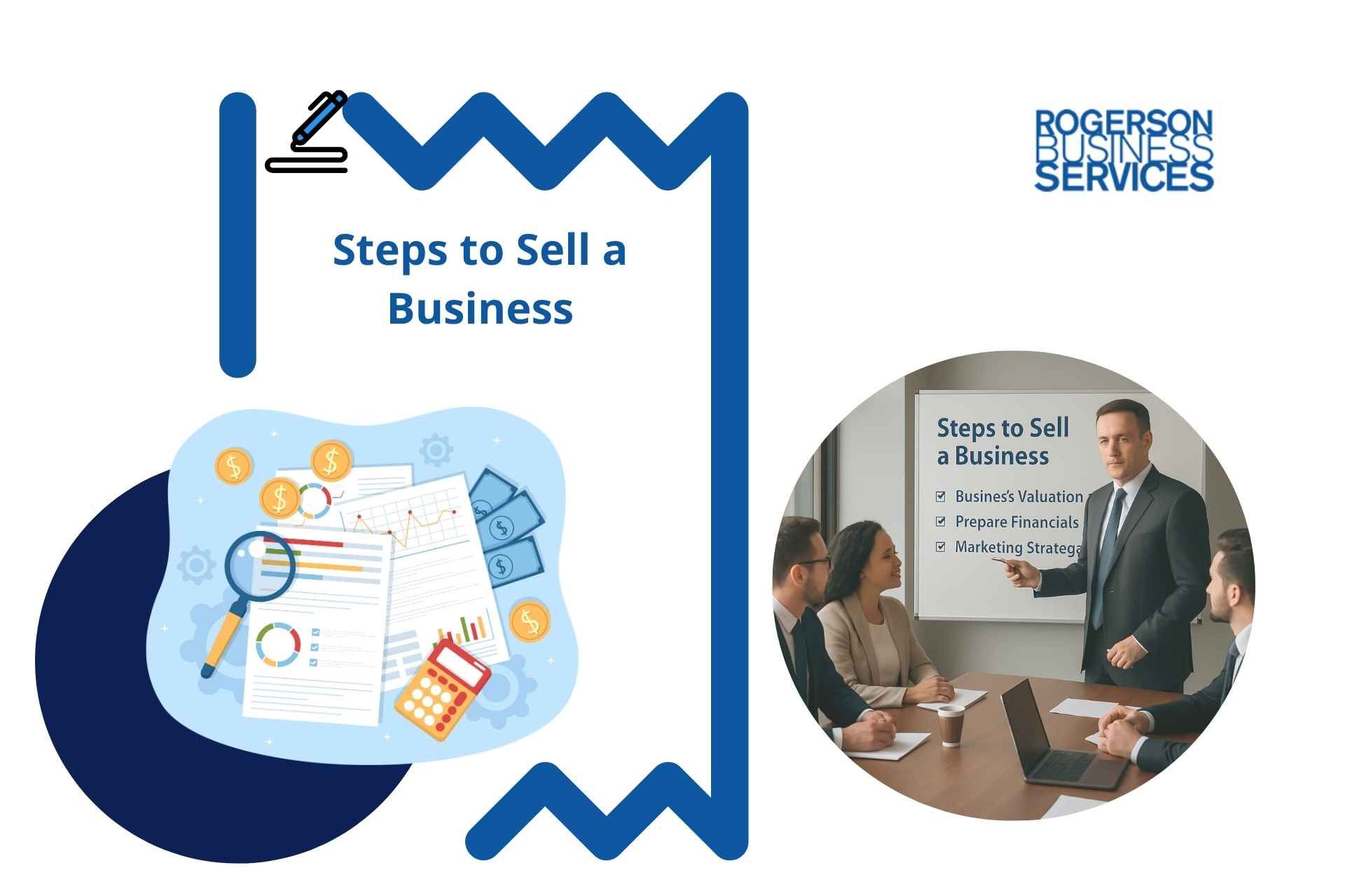
Steps to Sell a Business
By Andrew Rogerson, CM&AP, LCBB (Rogerson Business Services).
Andrew Rogerson is an M&A advisor and a 35+ year business owner who helps California lower and mid-market owners value, position, and sell their companies through sell-side representation—credentials: CM&AP and LCBB listing.
Selling a business in California is one of the most financially significant decisions you will ever make, and the margin between a good outcome and a great one often comes down to preparation and process.
California's regulatory environment adds layers that most other states simply don't have, from CDTFA tax clearance to bulk sales notice requirements, all of which can extend your timeline and erode value if you're caught off guard. The good news is that prep can boost value 15-25% when done right.
This guide walks you through every major step, so you can exit on your terms and at the number you deserve.
Key Takeaways
| Point | Details |
|---|---|
| Start with clear goals | Decide on your preferred exit timing and desired financial or legacy outcomes before beginning the sale process. |
| Professional valuation matters | Use SDE or EBITDA methods and benchmark multiples to set realistic price expectations and boost credibility with buyers. |
| Preparation pays off | Getting financials, leases, and compliance in order before listing can increase your sale value by up to 25 percent. |
| Structure affects outcome | The asset vs. stock sale decision determines your tax bill, risk, and the complexity of the transaction. |
| Close smoothly in California | Plan for escrow, tax clearance, and regulatory steps unique to California to ensure a successful sale and handoff. |
Define Your Exit Goals and Strategic Timeline
Before you talk to a single buyer or broker, you need to know what you actually want from this sale. That may seem obvious, but many owners skip it and end up reacting to offers instead of driving the process.
Are you looking for immediate cash out? A legacy transfer through an ESOP or family succession? Or a phased transition where you stay involved for a year or two? Each path has a different buyer pool, deal structure, and timeline.
Here's what you need to clarify upfront:
- Liquidity goal: Full cash at close, earnout, or seller financing?
- Legacy priority: Do you care who buys the business and what happens to your team?
- Personal readiness: Are you emotionally and financially ready to step away?
- Business readiness: Is the business able to run without you for 90 days?
On timing, California deals typically run 6-12 months from start to close, with prep taking 2-6 weeks, marketing 2-12 weeks, and the LOI through closing phase another 4-10 weeks. That's the optimistic version.
If your books are messy or your lease isn't assignable, add more time. The owners who get the best outcomes start thinking about their exit strategy considerations 1-3 years before they actually want to close.
Pro Tip: Set a hard target close date and work backward. This forces you to prioritize the right prep tasks instead of treating the sale as a someday project.
Get a Professional Valuation
Once your exit goals are set, the next priority is understanding what your business is worth and why. This is where many owners get surprised, either pleasantly or otherwise. The valuation method depends heavily on your revenue size.

| Business size | Method | Typical multiple range |
|---|---|---|
| Under $5M revenue | SDE (Seller's Discretionary Earnings) | 2x to 4.5x |
| $5M to $50M revenue | EBITDA | 3.5x to 8x |
For context, median SDE multiple is 2.86x for Main Street businesses, while the lower mid-market EBITDA multiple sits at 4.8x per IBBA 2025 data. That gap between 2.86x and 4.8x is not just about size. It's about how the business is built.
The factors that push your multiple higher include recurring revenue streams, clean and audited financials, transferable customer contracts, low customer concentration (no single client over 15-20% of revenue), and a management team that doesn't depend entirely on you. Buyers pay a premium for businesses that feel like they can run without the founder.
Pro Tip: Get a formal valuation from a credentialed advisor before you go to market. It anchors your asking price with data and signals to buyers that you're a serious seller. You can start by valuing your business using established frameworks, then cross-check with a valuation methods guide to understand which approach fits your situation.
Prepare Your Business For Due Diligence
Having determined your ballpark value, your next critical move is robust, proactive preparation for diligence and compliance. This is where deals die. A buyer's attorney or accountant will pull on every thread, and if something unravels, you either lose the deal or lose leverage on price.
Here's the preparation sequence that works:
- Compile three years of financials prepared or reviewed by a CPA. Audited statements are ideal for deals over $5M.
- Clean up your legal structure. Resolve any outstanding disputes, update operating agreements, and make sure all partner or shareholder agreements are current.
- Review all contracts. Customer agreements, vendor contracts, and employee agreements should be assignable to a new owner.
- Address your lease. California landlords can block a sale if the lease isn't assignable. Get landlord conversations started early.
- Resolve tax liabilities. California's CDTFA requires a tax clearance before a business sale closes. Outstanding sales tax issues will surface and delay everything.
- Check bulk sale compliance. California's bulk sales law requires formal notice to creditors. Missing this step creates successor liability for the buyer, which kills deals.
"The businesses that command top-of-range multiples are the ones where due diligence feels boring. No surprises, no drama, just clean documentation."
Thorough preparation can boost your sale value by 15-25%. Use a business pre-sale checklist to track your progress, and make sure you have all the required sale documents organized before you go to market.
Decide on Sale Structure: Asset vs. stock and Special California Considerations
With documentation and financials in order, structuring the transaction is the next pivotal decision, and it has serious legal and tax consequences. This is not a decision to make based on what a friend did. Get a transaction attorney and a CPA involved before you agree to anything.
| Structure | Buyer preference | Seller preference | Key tradeoff |
|---|---|---|---|
| Asset sale | Yes, limits liability | Less favorable | Buyer gets step-up in basis; seller pays ordinary income on some assets |
| Stock sale | Less preferred | Yes, cleaner tax treatment | Buyer inherits all liabilities |
| §338(h)(10) election | Moderate | Moderate | Treated as asset sale for tax, stock sale for legal |
| ESOP | Situational | Legacy-focused owners | Capped at fair market value, but strong tax benefits |
Buyers favor asset sales because they can pick and choose what they're acquiring and leave known liabilities behind. Sellers often push for stock sales because the entire gain is taxed at capital gains rates rather than a mix of ordinary income and capital gains. The §338(h)(10) election is a hybrid that can satisfy both sides, but it requires specialist advice to execute correctly.
California-specific issues that affect structure:
- High capital gains tax: California taxes capital gains as ordinary income at the state level, which can push your effective rate above 30% combined with federal.
- Bulk sales notice: Required to avoid successor liability for the buyer, which means it's a deal requirement, not optional.
- CDTFA clearance: The state tax board must sign off before funds are released from escrow.
For owners who prioritize legacy over maximum price, an ESOP is worth exploring. Review your ownership transfer methods and get familiar with the CA legal and tax landscape before committing to any structure.
Pro Tip: Run a tax projection for both asset and stock sale scenarios before you negotiate. The after-tax difference can be hundreds of thousands of dollars, and knowing your numbers gives you real leverage.
List Your Business, Market to Buyers, and Manage The Sale Process
With the structure decided, the focus shifts to actual deal marketing and management, often the most unpredictable part of the process. The quality of your buyer pool determines your outcome more than almost anything else.
Here's how to run the marketing process effectively:
- Select the right intermediary. For businesses under $5M, a business broker typically makes sense. For $5M to $50M, a lower middle market M&A advisor with California experience is the right call.
- Prepare a confidential information memorandum (CIM). This is your business's sales document. It should tell a compelling story backed by clean data.
- Pre-qualify buyers before sharing financials. Require NDAs and proof of financial capacity before any sensitive information changes hands.
- Manage landlord relationships proactively. Lease approval is one of the most common deal killers in California. Start that conversation early.
- Plan for regulatory delays. California deals run longer than most states due to escrow requirements and CDTFA clearance. Build buffer into your timeline.
"Confidentiality is not just a courtesy in a business sale. A leak to employees, customers, or competitors before the deal closes can materially damage the business you're trying to sell."
Know where to find buyers for your specific business type and size, and understand which listing platforms give you the right exposure without broadcasting your sale to the wrong audience.
Close The Deal and Post-Sale Transition Planning
After mutually acceptable terms are reached, detailed closing steps and post-sale transition ensure enduring success for all parties. This phase feels like the finish line, but it has its own set of landmines.
Key closing and transition steps:
- Coordinate escrow. California business sales almost always go through escrow. Your escrow officer manages fund disbursement, lien clearances, and regulatory sign-offs.
- Get CDTFA clearance. Lease approvals, CDTFA audits, and compliance surprises are the most common causes of closing delays. Start the CDTFA process as early as possible.
- Finalize employee transitions. Decide who stays, who goes, and whether key employees get retention bonuses tied to the close.
- Negotiate your consulting agreement. Most buyers want the seller available for 30-90 days post-close. Define the scope and compensation upfront.
- Monitor post-close compliance. Representations and warranties in the purchase agreement can create liability for months after closing. Know what you've agreed to.
Pro Tip: Don't wait until closing week to start the CDTFA clearance process. It can take 4-8 weeks on its own. Use a California closing checklist to make sure nothing falls through the cracks in the final stretch.
Get Expert Help to Sell Your Business For The Best Price
Bringing your deal to a successful close is easier with a seasoned, local partner at your side. California's regulatory complexity, combined with the sheer number of moving parts in a lower middle market transaction, means that going it alone almost always costs you more than the fees you're trying to avoid.

A California-focused M&A advisor expands your buyer pool, manages confidentiality, navigates CDTFA and escrow requirements, and keeps negotiations on track when they get tense.
The difference between a well-run process and a poorly run one is often measured in multiples, not just dollars. If you're ready to understand what your business is worth and what a sale process looks like for your specific situation, start with valuation services tailored to California owners in the $2M to $50M range.
You can also list your business for sale with advisors who know your market, or download the business for sale guide to map out your full exit plan before your first conversation.
Frequently Asked Questions
How Long Does it Usually Take to Sell a Business in California?
Selling in California typically takes 6-12 months, with prep, marketing, and closing each adding time. Regulatory steps like CDTFA clearance and escrow often push timelines beyond what owners expect.
What is The Difference Between Asset Sale and Stock Sale?
Buyers prefer asset sales to limit inherited liabilities, while sellers often favor stock sales for more favorable capital gains treatment. Hybrid structures like §338(h)(10) and ESOPs can bridge the gap depending on your priorities.
What Can Owners Do to Get The Highest Value For Their Business?
Start preparing 1-3 years before your target close date, clean up financials, resolve legal and lease issues, and reduce owner dependency. Done right, early preparation boosts value 15-25% compared to a rushed sale.
Are There Special California Regulations For Selling a Business?
Yes. California requires bulk sales notice to creditors, CDTFA tax clearance before escrow closes, and formal escrow for most transactions. These steps extend California deal timelines compared to other states and require experienced local advisors to navigate efficiently.
Hey there! Can we send you a gift?
We just wanted to say hi and thanks for stopping by our little corner of the web. :) we'd love to offer you a cup of coffee/tea, but, alas, this is the Internet.
However, we think you'll love our email newsletter about building value and properly position your company before transition/exit your business ownership.
As a special welcome gift for subscribing, you'll also get our helping and educational guides, tips, tutorials, etc.. for free.
It's filled with the best practices for retiring serial business owners like Dan Gilbert, Larry Ellison, Warren Buffett, and many more.
Just sign up for our emails below.