Choosing Internal or External Succession Planning for California Firms
Comparing Internal and External Succession Planning

Explore key differences in succession planning strategies.
| Internal Succession | External Succession | |
|---|---|---|
| Continuity | Maintains client relationships and company culture. | Depends on effective transition management. |
| Cost | Lower costs, around $1,000. | Higher costs, $4,000 - $6,000. |
| Timeframe | Requires 5-10 years for preparation. | Can be completed in 6-12 months. |
| Innovation | Encourages growth through internal talent. | Brings fresh ideas and perspectives. |
| Client Trust | Strengthens trust with familiar leadership. | Risk of losing trust without clear communication. |
| Regulatory Compliance | Easier to manage within existing structures. | Requires careful assessment of buyer qualifications. |
| Talent Development | Focuses on mentoring and developing existing staff. | Involves recruiting and onboarding new leaders. |
| Market Adaptation | Retains institutional knowledge for stability. | May adapt quickly to market changes. |
When you compare internal vs external succession planning, you must look at your firm’s goals, culture, and the unique California market. Some firms value continuity and want to keep client trust through internal leaders. Others seek new growth and choose external succession to bring in fresh expertise. Andrew Rogerson of Rogerson Business Services helps California business owners weigh these options, using deep industry knowledge to guide you toward the best outcome for your situation.
Key Takeaways
- Succession planning is essential for business continuity. It prepares your firm for leadership changes, protecting clients and employees.
- Internal succession promotes from within, maintaining company culture and client trust. Start identifying and mentoring potential leaders early.
- External succession brings in fresh ideas and skills. This option is ideal for firms seeking innovation or a strategic shift.
- Cost differences matter. Internal succession is generally cheaper, while external succession involves higher recruitment and transaction costs.
- Regularly review your succession plan to adapt to changes in California laws and your business needs, ensuring a smooth transition.
What Is Succession Planning?
Succession planning helps you prepare for the future of your business. In California, this process is vital for business continuity and smooth leadership transitions. You need to plan for what happens when an owner or key leader leaves. This can happen due to retirement, a career change, or unexpected events. Good succession planning protects your company, your clients, and your employees.
- Succession planning ensures a smooth transfer of ownership and management.
- It helps you avoid legal disputes and keeps your business running.
- You can use methods like retention planning or buy-sell agreements.
- A formal plan aligns with your long-term goals and keeps your business compliant with California laws.
Internal Succession Explained
Internal succession means you promote someone from within your company to take over a leadership role. This approach keeps your company culture strong and motivates your team. You can start early by identifying and mentoring high-potential employees. Andrew Rogerson of Rogerson Business Services often recommends this path for firms that want to maintain client trust and preserve their legacy.
| Aspect | Internal Succession |
|---|---|
| Definition | Promoting existing employees for leadership roles |
| Benefits | Maintains culture, motivates staff, builds loyalty |
| Process | Identify and develop internal talent |
External Succession Explained
External succession brings in a new leader from outside your company. This can introduce fresh ideas, new skills, and a broader network. If you want to maximize value or need expertise your team lacks, this option may fit your goals. Rogerson Business Services, led by Andrew Rogerson, specializes in guiding California firms through external transitions, ensuring you get the best outcome in the market.
| Aspect | External Succession |
|---|---|
| Definition | Hiring outside candidates for leadership positions |
| Benefits | Brings new skills, perspectives, and networks |
| Process | Recruit and onboard external candidates |
California’s Business Environment
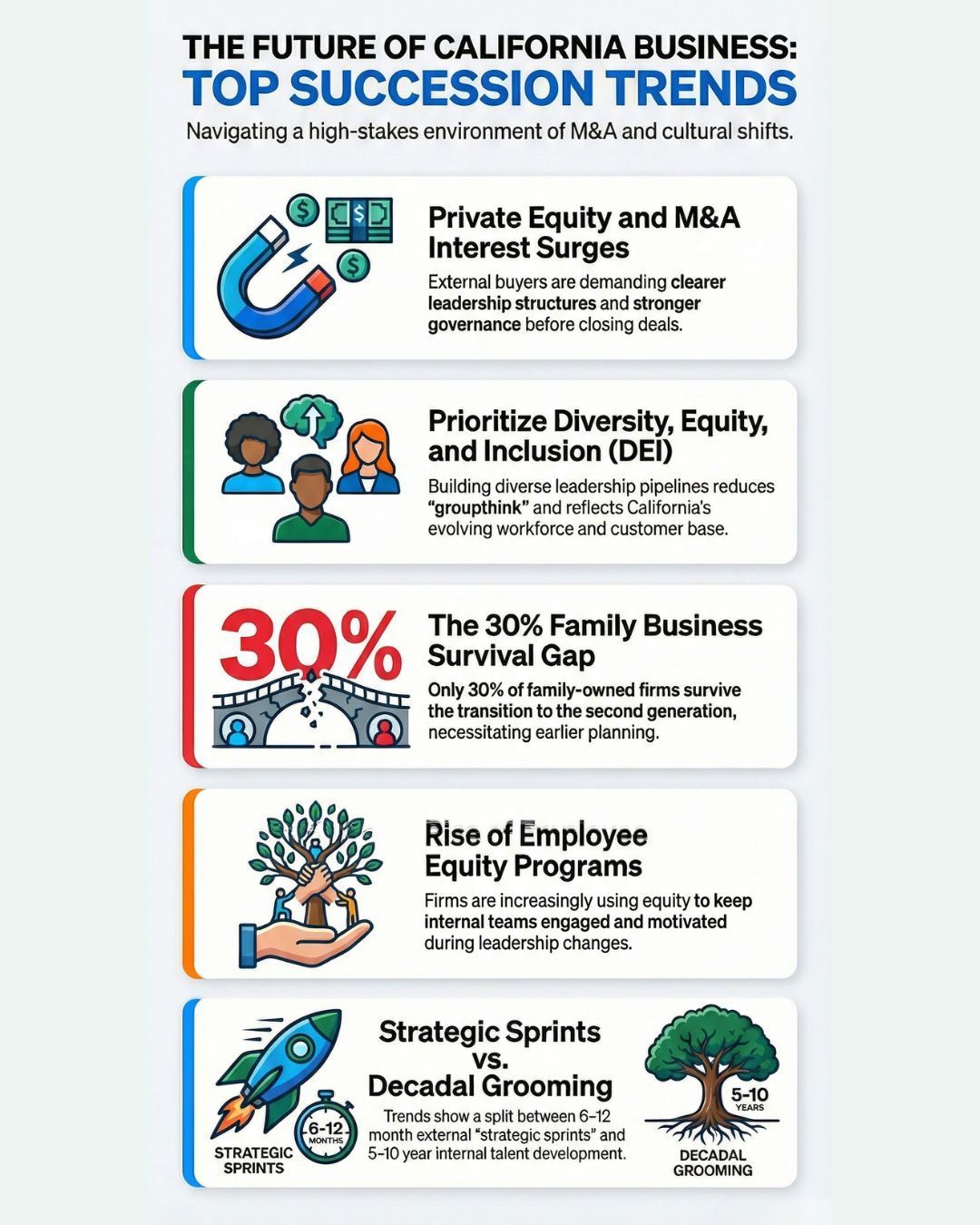
California’s business landscape shapes your succession planning choices. Many family businesses struggle to survive past the second generation, with only 30% making it that far. You should start planning early, work with trusted legal counsel, and update your estate plans as your business grows. The unique market, strict regulations, and diverse talent pool make internal vs external succession planning a key decision for every California firm.
Tip: Regularly review your succession plan to keep up with changes in California law and your business needs.
Internal vs External Succession Planning: Key Differences
When you evaluate internal vs external succession planning for your California firm, you need to look at several important factors. Each approach offers unique benefits and challenges. Andrew Rogerson of Rogerson Business Services helps business owners understand these differences, guiding you through the decision process with expert advice tailored to California’s market.
Continuity and Client Relationships
Internal succession planning gives you the advantage of stability. Promoting leaders from within your organization reassures clients and staff that your firm will continue to deliver the same level of service. You keep your company’s culture strong and maintain trust with clients who value long-term relationships.
| Advantage | Explanation |
|---|---|
| Continuity and Stability | Ensures smooth operation during transitions, reassuring clients of the firm's commitment to service. |
| Retention of Talent | Investing in future leaders fosters loyalty and reduces turnover, enhancing long-term success. |
| Enhanced Reputation | Demonstrates professionalism and foresight, improving the firm's standing among clients and peers. |
Don't have time to read more?
Take a shortcut and play the video overview below
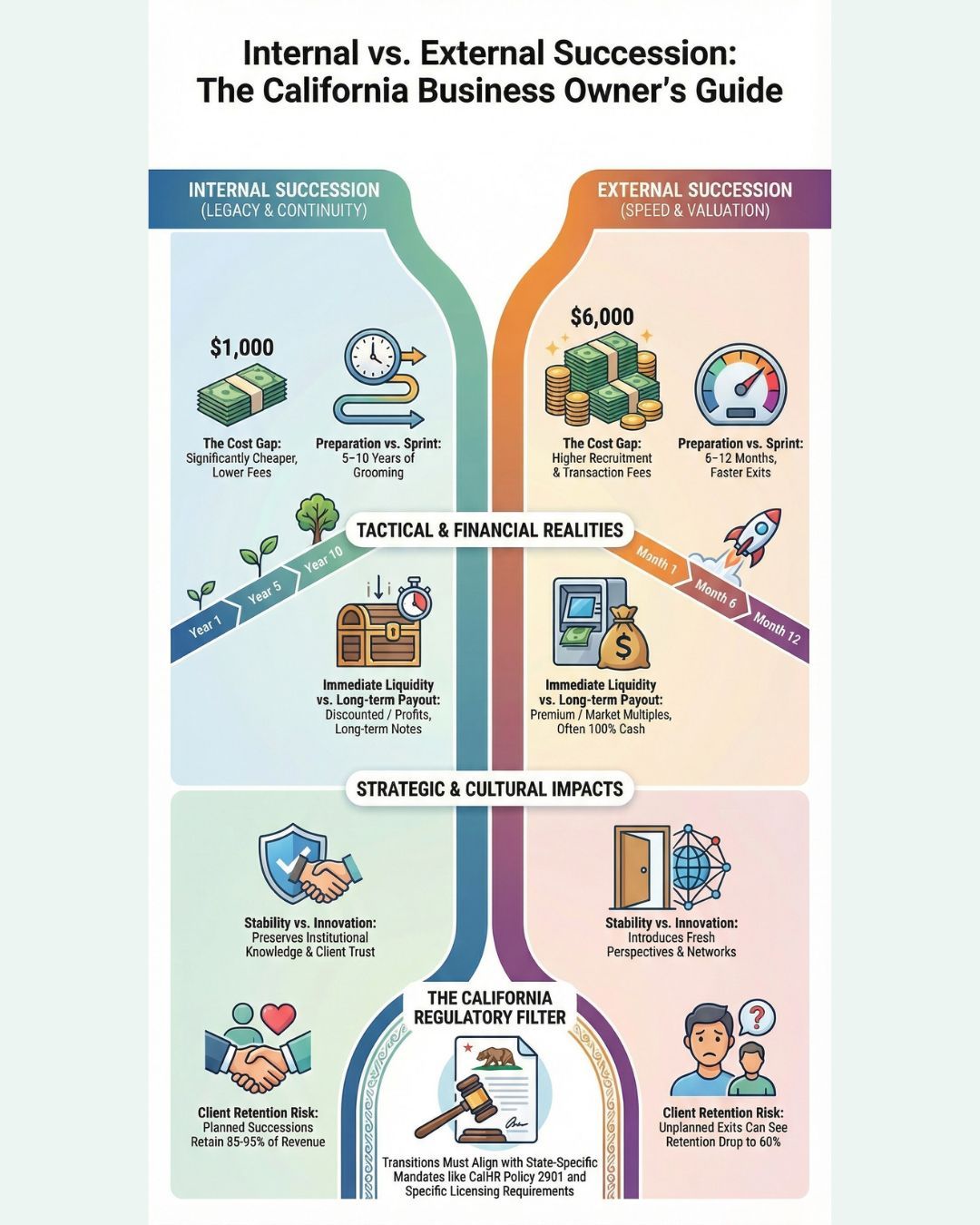
External succession planning can also protect client relationships, but the outcome depends on how you manage the transition. If you name a successor and plan the handover, you can retain 85-95% of client revenue. Unplanned exits or lack of a clear replacement can drop retention rates to 60-70%. You must communicate clearly and involve clients early to preserve trust.
- Succession planning preserves the value of your agency.
- It protects customer trust and reliance.
- It ensures continuity for clients and employees.
Fresh Perspectives and Innovation
Internal succession planning supports growth and opportunity. By developing leaders from within, you encourage innovation and help your organization respond to market changes. Your team retains institutional knowledge, which minimizes disruptions and fosters a culture of growth.
External succession planning brings in new viewpoints. When you hire leaders from outside, you introduce fresh ideas and strategies. This approach works well if you want to shift your firm’s direction or drive innovation. You must select and onboard new leaders carefully to ensure they fit your company’s culture and goals.
- External candidates offer new perspectives.
- This strategy benefits firms aiming for innovation or a strategic shift.
- Effective onboarding is key for successful integration.
Cost and Transaction Complexity
Cost is a major factor in internal vs external succession planning. Internal succession usually costs less, with typical expenses around $1,000. You invest in training and development, but you avoid the higher costs of external recruitment.
| Succession Type | Cost Range |
|---|---|
| Internal | $1,000 |
| External | $4,000 - $6,000 |
External succession planning often requires more resources. You pay higher recruitment fees and may need to offer competitive compensation to attract top talent. If you sell your business, you face additional transaction costs and must navigate complex deal structures. Rogerson Business Services specializes in managing these transactions, helping you maximize value and reduce deal fatigue.
| Comparison Vector | Internal Succession | External Sale (M&A) |
|---|---|---|
| Valuation & Payout | Discounted, relying on seller notes paid over years from future profits. | Premium, with immediate liquidity at market multiples, often 100% cash or cash + equity rollover. |
| California Tax Risk | Mitigated, with options like ESOPs deferring capital gains. | High exposure, facing immediate 13.3% CA State Tax and federal taxes. |
| The Timeline | Decadal Grooming (5-10 years) for training successors. | Strategic Sprint (6-12 months) for faster exits and due diligence. |
Time and Readiness
Internal succession planning takes time. You need five to ten years to identify, train, and prepare future leaders. This long-term approach builds resilience and ensures your organization is ready for change.
External succession planning moves faster. You can complete a sale or hire a new leader in six to twelve months. This option works well if you need a quick transition or want immediate liquidity. Andrew Rogerson and his team at Rogerson Business Services help you manage the process, ensuring transparency and minimizing disruption.
"A successful transition is usually an indicator of a strong and resilient organization, and it is imperative to prioritize this essential work."
— Silber
California Regulatory and Compliance Factors
California’s regulatory environment adds complexity to succession planning. You must follow state guidelines to ensure leadership continuity and knowledge preservation.
| Regulatory Requirement | Description |
|---|---|
| State of California Succession Management Model | Provides guidance for state organizations to develop succession management plans, ensuring leadership continuity and knowledge preservation. |
| CalHR Policy 2901 | Mandates that all California state organizations with civil service employees create and maintain succession management plans that comply with CalHR requirements. |
You need to consider whether your successor or buyer is qualified and holds the necessary licenses. You must assess how ownership changes will affect your clients and business operations. If you plan an internal succession, check if your team members want equity and can afford it based on your firm’s valuation.
California’s market trends and diverse talent pool also influence your decision. Internal vs external succession planning requires you to balance regulatory compliance, market demands, and your firm’s strategic goals. Rogerson Business Services offers expert guidance to help you navigate these challenges and choose the best path for your business.
Trends Shaping Succession Planning in California
Private Equity and M&A Activity
You see private equity and M&A activity changing how California firms plan for succession. Many founders now face pressure to define their company’s purpose and culture before handing over leadership. Private equity buyers want clear leadership structures and strong governance. If you choose an external sale, you may attract more interest from investors, but you must prepare your business for a smooth transition. Internal succession, on the other hand, often keeps your culture intact but may not appeal as much to outside investors.
- Economic uncertainty can slow down deal closings.
- Corporations and private equity firms show strong interest in acquiring businesses.
- Employee equity programs are gaining popularity to keep teams engaged.
Andrew Rogerson of Rogerson Business Services helps you navigate these trends, ensuring you understand both the risks and rewards of each path.
Diversity, Equity, and Inclusion
Diversity, equity, and inclusion (DEI) now play a key role in succession planning. If you build a diverse leadership pipeline, you reflect your workforce and customer base. This approach drives growth and helps your business avoid groupthink. Internal succession lets you develop talent from underrepresented groups, creating new pathways for advancement. External succession can also bring in leaders with fresh perspectives and backgrounds.
DEI fosters innovation and better decision-making, which are critical for your firm’s long-term success.
- Organizations that focus on DEI in succession planning make stronger decisions.
- You reduce barriers to entry by developing talent from all backgrounds.
Business Sale and Advisory
Business sale and advisory services support both internal and external succession strategies. If you want to maximize your sale proceeds or minimize taxes, you need expert guidance. Andrew Rogerson and his team at Rogerson Business Services help you identify the best strategy for your goals. They offer services such as business valuations, buy-sell agreements, and retirement planning.
- Buy-sell arrangements ensure a smooth transfer of business interests.
- Advisory services help with internal transfers, identifying buyers, and planning for taxes and retirement.
You benefit from a tailored approach that secures your legacy and supports your transition, no matter which succession path you choose.
Decision Framework for California Firms
Assessing Organizational Readiness
You need to evaluate if your business is ready for a leadership transition. Start by looking at your current leadership team and identifying any skill gaps. Use a structured approach to assess readiness, such as a comprehensive succession assessment. This process helps you understand where your strengths and weaknesses lie.
| Framework Component | Description |
|---|---|
| Comprehensive succession assessment | Evaluates current leadership capabilities and identifies critical skill gaps. |
| Strategic transition planning | Creates customized succession strategies aligned with business objectives and stakeholder expectations. |
| Organizational continuity focus | Develops enterprise-wide succession processes to ensure resilience through transitions. |
Implementing clear, documented selection criteria helps address this challenge by creating consistent standards for evaluating potential successors. Define the specific skills, experiences, and competencies required for each role.
Andrew Rogerson of Rogerson Business Services offers expert guidance in this area. His team specializes in helping California firms prepare for both internal and external transitions, focusing on trust, ethics, and confidentiality.
Aligning with Strategic Goals
You should align your succession plan with your business strategy. Begin by identifying key metrics that match your goals. Define which roles are most critical for your company’s future. Review your current talent and see where you need to develop new skills.
- Identify key metrics that align with business and talent strategies.
- Define critical and strategic jobs based on your business plan.
- Outline the core capabilities needed for success.
- Conduct a talent review to assess workforce strengths and weaknesses.
- Create a succession plan that includes development plans for internal talent.
Andrew Rogerson and his team help you connect your succession plan to your long-term vision, ensuring you maximize value and secure your legacy.
Succession Planning Checklist
Use this checklist to guide your decision on internal vs external succession planning:
- Define success criteria, including leadership and financial goals.
- Set a timeline for planning, usually 3-5 years.
- Analyze key stakeholders, both inside and outside your business.
- Assess and develop future leaders.
- Plan for ownership transfer with a focus on business health and tax efficiency.
- Get an accurate business valuation.
- Review tax implications and seek professional guidance.
- Provide training and mentorship for successors.
- Update your succession plan regularly.
Consulting with a trusted advisor like Rogerson Business Services can help you address unexpected events, minimize risks, and ensure a smooth transition. You build a future-ready leadership pipeline and strengthen your organization for years to come.
Choosing the right succession planning approach shapes your firm’s future in California’s unique market. You need to weigh your goals, culture, and readiness. A structured comparison helps you avoid risks like leadership gaps or family disputes and keeps your business resilient.
- Over a third of advisors will retire soon, but many lack a plan.
- Using clear frameworks reduces bias and improves outcomes.
"Delaying or poorly planning could mean risking the ultimate valuation of your practice, as well as putting key employees and clients at risk."
Andrew Rogerson and Rogerson Business Services guide you through each step, helping you protect your legacy and make confident decisions.
FAQ
What is the main difference between internal and external succession planning?
Internal succession promotes leaders from within your company. External succession brings in new leaders from outside. You choose based on your goals, culture, and readiness for change.
How do costs compare between internal and external succession?
Internal succession usually costs less. You invest in training and development. External succession often requires higher recruitment fees and transaction costs. Andrew Rogerson of Rogerson Business Services can help you understand the full financial impact.
Which approach helps keep client relationships strong?
Internal succession often keeps client trust and loyalty. You maintain familiar faces and company values. External succession can also work if you plan carefully and communicate early with clients.
Why should I consult Rogerson Business Services for succession planning?
You get expert guidance from Andrew Rogerson and his team. They know California’s market and regulations. They help you compare options, maximize value, and ensure a smooth transition for your business.
Hey there! Can we send you a gift?
We just wanted to say hi and thanks for stopping by our little corner of the web. :) we'd love to offer you a cup of coffee/tea, but, alas, this is the Internet.
However, we think you'll love our email newsletter about building value and properly position your company before transition/exit your business ownership.
As a special welcome gift for subscribing, you'll also get our helping and educational guides, tips, tutorials, etc.. for free.
It's filled with the best practices for retiring serial business owners like Dan Gilbert, Larry Ellison, Warren Buffett, and many more.
Just sign up for our emails below.